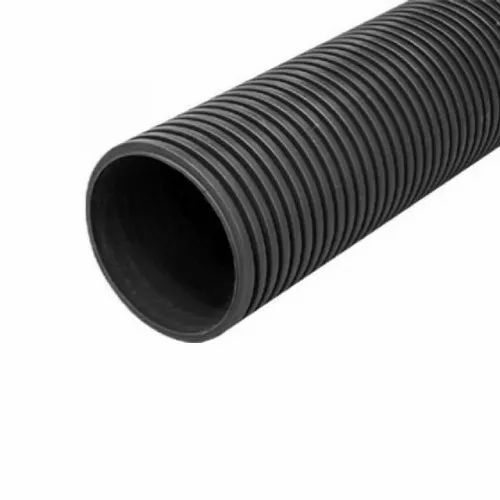
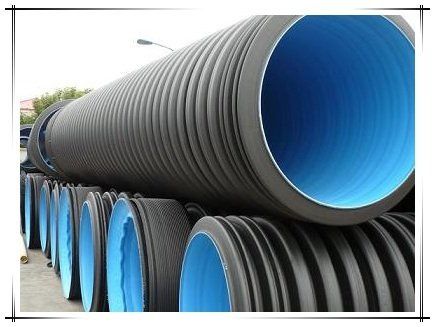
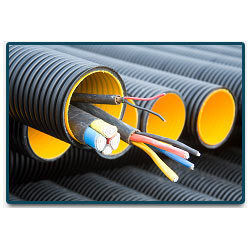
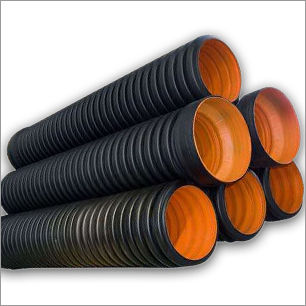
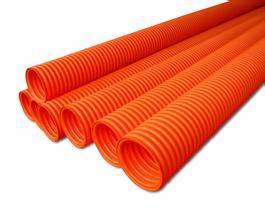
About HDPE Corrugated Subsoil Drainage Pipe
Leveraging on our state-of-the-art infrastructural unit, we have been a proud manufacturer of HDPE Corrugated Subsoil Drainage Pipe for our highly respected clients. They are designed with utmost precision at our end, making use of best quality HDPR and latest machinery. We offer these HDPE Corrugated Subsoil Drainage Pipe in a wide range of dimensions which fits in the requirements of our diverse patrons. We offer these pipes at highly affordable prices and strive to make delivery within a given time period.
Features of HDPE Corrugated Subsoil Drainage Pipe:
- High strength
- Weather resistance
- Precisely manufactured
- Durable Finishing
FAQs of HDPE Corrugated Subsoil Drainage Pipe:
Might HDPE at any point pipe utilized for waste?
HDPE pipe is involved across the globe for applications, for example, water mains, gas mains, sewer mains, slurry move lines, country water system, fire framework supply lines, electrical and interchanges course, and tempest water and waste lines.
What is folded HDPE pipe utilized for?
Folded HDPE is predominantly utilized for gravity stream water the executives frameworks like tempest waste, subsurface seepage, sterile sewers, and leachate assortment. Because of its light-weight and non-weak properties, folded HDPE pipe is likewise a superb decision for use in underground designs.
How long does HDPE endure underground?
Sturdiness testing finished in research center and field conditions gauges that a HDPE geomembrane can have a help life (half debasement) of north of 400 years.
Superior Drainage PerformanceEngineered with a smooth inner bore and corrugated exterior, these HDPE drainage pipes maximize hydraulic efficiency and strength while remaining lightweight. Their advanced design allows for high-capacity water infiltration and efficient removal, making them ideal for challenging drainage applications in agriculture, roads, construction sites, and sports fields.
Resilient Material for Critical ApplicationsManufactured from high-grade, virgin HDPE (PE80/PE100), the pipes are designed to resist UV exposure, harsh chemicals, and varying soil conditions. The UV stabilization and broad temperature range (-20C to 60C) make them reliable for outdoor installations, while integrated seals ensure leak-resistant connections and long-term durability.
Versatile and Easy InstallationAvailable in diameters from 63 mm to 200 mm with customizable lengths, these pipes are supplied in standard 6-meter sections. The push-fit, snap-fit, or coupler jointing options facilitate quick and secure installations, ideal for large-scale projects requiring flexible routing and minimal downtime.
FAQ's of HDPE Corrugated Subsoil Drainage Pipe:
Q: How are HDPE corrugated subsoil drainage pipes installed?
A: Installation involves digging a trench, placing the pipe at the required depth, and backfilling with soil or aggregate. The flexible design allows for easy alignment in curved or uneven areas, and jointing can be accomplished through push-fit, snap-fit, or coupler systems with integrated rubber ring seals.
Q: What are the main advantages of using HDPE corrugated drainage pipes for subsoil applications?
A: These pipes combine high hydraulic flow capacity, durable chemical and UV resistance, lightweight handling, excellent flexibility, and outstanding strength. They are RoHS compliant, recyclable, and have a long service life, making them efficient and environmentally responsible for various drainage projects.
Q: Where are these pipes commonly used?
A: HDPE corrugated subsoil drainage pipes are frequently installed in land drainage, subsoil and subsurface applications, road drainage, sports fields, farmlands, and civil infrastructure projects. Their flexibility and adaptability make them suitable for varied environmental and soil conditions.
Q: What options are available for water infiltration and why does it matter?
A: Pipes are offered in full or half perforated configurations, allowing selection based on the required rate of water absorption in the application. Perforation ensures controlled subsoil water collection, improving drainage efficiency in specific installations such as sports fields and agricultural lands.
Q: What maintenance is required for HDPE subsoil drainage pipes?
A: Routine maintenance may involve periodic inspection and flushing to remove any debris. The smooth inner surface minimizes sediment build-up, helping maintain hydraulic performance with minimal effort.
Q: How do I choose the appropriate diameter, thickness, and ring stiffness for my project?
A: Selecting the right pipe depends on factors like the expected water flow, installation depth, and soil conditions. Diameters from 63 mm to 200 mm and ring stiffness ratings (SN2-SN8) are available to address standard engineering requirements. Consulting an expert or distributor ensures optimal product specification for your needs.




 English
 Spanish
 French
 German
 Italian
 Chinese (Simplified)
 Japanese
 Korean
 Arabic
 Portuguese
 Send Inquiry
 Send Inquiry

